Neville Chamberlain and the Munich Agreement
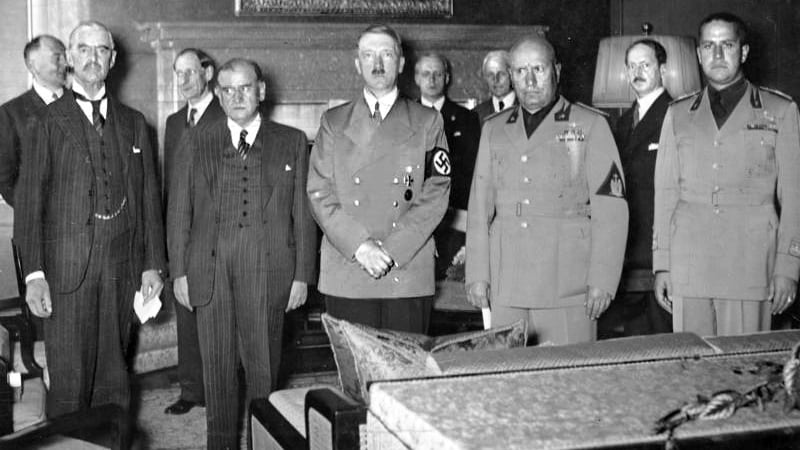
Neville Chamberlain and the Munich Agreement
Description: The Munich Agreement (September 1938) was a deal he made with Germany, Italy, and France, allowing Hitler to annex the Sudetenland (a German-speaking region of Czechoslovakia) in exchange for a promise of no further expansion. Chamberlain returned to Britain claiming it meant "peace for our time," but within months Hitler broke the agreement, leading to World War II.
By allowing Hitler to take the Sudetenland without resistance, Britain and France signaled they would not stop his expansion. This gave Germany strategic territory, resources, and confidence to continue aggression. It also weakened Czechoslovakia’s defenses, removed a potential ally, and convinced Hitler that the Western powers would not fight — which set the stage for his rapid conquests in 1939–40.
By allowing Hitler to take the Sudetenland without resistance, Britain and France signaled they would not stop his expansion. This gave Germany strategic territory, resources, and confidence to continue aggression. It also weakened Czechoslovakia’s defenses, removed a potential ally, and convinced Hitler that the Western powers would not fight — which set the stage for his rapid conquests in 1939–40.